Leave Your Message

Top 10 Used Brand Shoes Suppliers for Global Buyers

Sourcing Used Brand Shoes at scale requires more than comparing prices. Global buyers need suppliers who can explain product grades, sorting methods, and shipment terms clearly. A reliable partner should provide current stock details, realistic photographs, and written descriptions of common wear. Small differences matter. A scuffed heel, faded logo, or missing size label can affect resale value and customer trust.

This guide introduces ten suppliers for international buyers and outlines practical points to check before placing an order. Supplier availability, shipping options, and minimum quantities may change, so confirm each detail directly. Ask how items are inspected, how mixed-size lots are packed, and what happens when a shipment differs from its documented condition. Keep records of samples, invoices, and agreed specifications. These steps do not remove every risk. They make problems easier to identify.

No list can fit every business. A small online seller may need flexible quantities, while a retailer may prioritize steady volume and consistent grading. Compare suppliers against your own market, budget, and quality standards rather than relying on a ranking alone. It is also wise to test a modest order before committing to larger shipments. Sometimes the paperwork looks perfect, but the actual assortment tells a different story. That is worth checking.
Top 10 Used Brand Shoes Suppliers for Global Buyers

Understanding the Global Market for Used Branded Shoes

The global market for used branded shoes is shaped by affordability, local fashion preferences, and the availability of dependable stock. Demand varies by region: some buyers prefer everyday trainers, while others look for formal shoes or outdoor footwear. Seasonal changes matter, too. A shipment of lightweight shoes may move quickly in a warm coastal city but sit longer in a cooler market.

For global buyers, supplier quality is more than a low quoted price. Ask how pairs are sorted, how condition grades are defined, and whether product photos reflect the actual lot. Clear size lists and counts help buyers plan inventory. Small details matter. Scuffed soles, loose stitching, or missing insoles can change a pair’s resale potential. Sample checks and written specifications reduce avoidable surprises, though grading can still involve judgment.

Shipping distance, packing quality, and consistent supply also affect the final cost. Buyers should check relevant import requirements in their destination market and confirm what documents accompany each shipment. A polished spreadsheet may look reassuring, but it cannot show every flaw. Comparing samples with the supplier’s grade descriptions is a practical step, and repeat orders can reveal whether quality stays consistent. One imperfect detail: market demand is hard to predict exactly, even with careful research.
How Used Shoe Suppliers Source, Sort, and Grade Their Stock

Used shoe suppliers build inventory through several channels, including retail returns, collection programs, and approved resale partners. Reliable suppliers track where each batch came from and keep purchase records available for buyers. Ask how stock is acquired, how mixed lots are handled, and whether shipment documents match the goods. A clear answer matters.

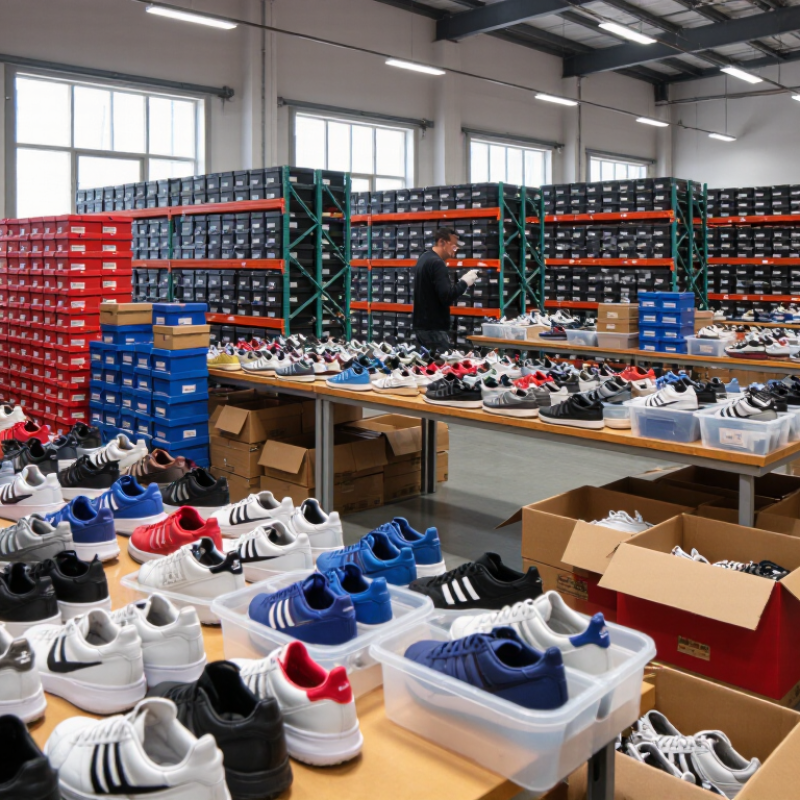
At the warehouse, workers separate shoes by type, size range, material, and visible condition. They may check pairs under bright lights, press the soles for separation, and inspect seams, insoles, and fasteners. Stains, strong odors, missing parts, and uneven wear should be recorded rather than hidden in a broad grade. Sorting by hand takes time, and rushed checks can miss defects.

Grades are not universal. One supplier’s “excellent” pair may show light wear, while another may allow noticeable scuffing. Request written grading rules, recent photos, and a sample lot before placing a large order. Ask what percentage of a shipment can fall below the stated grade, and agree on how discrepancies are documented. A sample helps, but it cannot represent every pair. Even careful inspection leaves room for error, so buyers should leave some tolerance in their expectations.

Criteria for Evaluating Suppliers of Used Branded Shoes

For global buyers, supplier evaluation should begin with stock traceability, not a low quoted price. Ask for batch-level records showing item counts, size ranges, condition grades, and source categories. ThredUp’s 2024 Resale Report, produced with GlobalData, recorded 14% growth in U.S. secondhand apparel in 2023. The broader apparel market grew 2%. This is useful demand context, not shoe-specific proof. Details matter.

Request recent, date-stamped photographs of actual lots, plus a written grading guide that defines scuffs, sole wear, stains, and missing components. Ask how inspectors sample each shipment and how many items typically fail their stated grade. A small trial order can test whether the delivered mix matches the listing. Compare landed cost per accepted pair, including sorting, freight, and likely rejects. Ask for inventory update frequency, packing specifications, dispatch records, and a clear process for resolving discrepancies. Check references from buyers handling similar volumes. A polished catalogue is not evidence of consistent stock. I would also track delivery accuracy across several orders; one successful shipment can give a misleading impression.

Profiles of 10 Used Branded Shoes Suppliers for Global Buyers

Used branded-shoe sourcing varies widely, so these ten supplier profiles are best compared by operating model: bulk wholesalers, export consolidators, regional distributors, specialist shoe graders, curated resellers, online stockists, liquidation buyers, mixed-category exporters, small-lot dealers, and warehouse-based suppliers. Each model suits a different buyer. A bulk wholesaler may offer lower unit costs, while a curated reseller may provide clearer condition details and smaller trial orders. Ask how pairs are sorted, photographed, packed, and checked before dispatch.

The 2024 ThredUp Resale Report, prepared with GlobalData, estimates that the global secondhand apparel market could reach $350 billion by 2028. This is apparel-wide data, not a footwear forecast, but it signals growing resale activity. For shoe buyers, the practical test remains shipment quality: request recent inventory photos, written grading definitions, size breakdowns, and a sample order where possible. A polished catalogue is not proof of consistent stock. Even careful grading can miss worn lining or a loose sole; that deserves honest discussion.

Tips: Compare suppliers using the same checklist. Confirm minimum order size, packing method, defect policy, and delivery timelines. Keep records from the first shipment. Small trials help, though they cannot guarantee future batches will match.

How to Manage Orders, Shipping, and Quality Control Internationally

International orders for pre-owned footwear need clear specifications before payment. Define the grade, size range, acceptable wear, cleaning standard, and defect limits in writing. Ask the supplier to share dated photos of the actual lot, not just sample pairs. UNCTAD’s Review of Maritime Transport 2024 reports that over 80% of world trade by volume moves by sea. That makes realistic booking windows and shipment tracking essential. The World Bank’s Logistics Performance Index 2023 compares 139 economies across six logistics dimensions, including tracking and timeliness. Check these factors when choosing routes and delivery partners.

Keep each order tied to a purchase order, packing list, and batch ID. Request carton counts, weights, and dispatch photos before goods leave the warehouse. For quality control, inspect a sample against agreed criteria, then record mismatches with clear photos. Independent checks can help with larger or mixed-grade lots. One weak point: photos may miss odor or hidden sole damage. A physical sample is more useful, though it can slow the order.

Tips: Confirm the inspection date, shipping method, and who handles each freight cost before deposit. Keep a small allowance for delays. It helps. After delivery, compare carton labels with the packing list and report discrepancies promptly.

Top 10 Used Brand Shoes Supplier Types for Global Buyers How to manage orders, shipping, and quality control internationally
Supplier Type Common Sourcing Regions Typical Order Size Order Preparation Quality Checks to Request Shipping Options Buyer Management Tips
Established textile-and-footwear sorter Western Europe and the United Kingdom Several hundred kilograms to full-container loads Usually a few days to two weeks for available stock; sorting requirements can extend this Agree written grades; inspect a representative sample for pair matching, wear, cleanliness, and sole condition Road freight within Europe; sea freight for most overseas orders Confirm whether the quoted grade is sorted by pair, condition, or both; approve a pre-shipment sample
Export-focused bulk wholesaler North America Typically palletized or bulk orders; minimums vary by stock lot Often several working days for in-stock goods, plus packing time Request lot photos, a packing list, and a documented inspection of mixed sizes and condition Truck or rail to port, then ocean freight; air freight is generally used only for urgent small consignments Specify the acceptable proportion of unsellable pairs and the remedy for material discrepancies
Japan-based secondhand footwear wholesaler Japan Small trial lots may be available; larger orders are commonly consolidated Stock confirmation and export preparation commonly take several working days or longer Check pair completeness, odor, visible damage, sizing labels, and consistency with the agreed grade Consolidated air or sea freight, depending on shipment size and delivery schedule Use a clear inspection checklist and confirm export packing and destination labeling requirements before payment
Regional collection-and-sorting operator Central and Eastern Europe From pallet quantities to truckload volumes Depends on sorting capacity and whether goods are already graded Ask for grade definitions, sample weights, and evidence that paired shoes are kept together Road freight is common for nearby markets; sea freight may be arranged for distant destinations Confirm the collection origin, transfer points, and responsibility for export documentation
Secondhand apparel exporter with a footwear line Australia and New Zealand Mixed-category consignments or footwear-only lots, subject to availability Allow time for footwear selection, repacking, and consolidation with other goods Require footwear-specific grading rather than relying only on general clothing grades Ocean freight is typical for international bulk shipments Separate footwear quantities and grades on the commercial invoice and packing list
Specialist vintage and resale wholesaler Western Europe, Japan, and North America Often smaller, selectively curated lots; availability changes frequently Selection and item-level checks can take longer than bulk-bale preparation Verify item descriptions, condition, pair completeness, and any claimed provenance independently Courier or air freight for smaller lots; consolidated air or sea freight for larger orders Request a manifest and dated photos; do not treat descriptions as proof of authenticity
Container-load used-goods exporter Export hubs serving African and Asian markets Usually large consolidated orders, often planned around container capacity May require one to several weeks to assemble and pack a specified mix Agree bale or carton weights, grade mix, packing method, and inspection access before loading Ocean freight, with destination port handling and inland delivery arranged separately or through a forwarder Confirm container loading records, seal number, Incoterms, and who pays destination charges
Online B2B used-footwear wholesaler Multiple exporting regions; stock location varies by listing Can range from sample orders to pallet or container quantities Depends on whether the listed stock is physically held or sourced after order placement Request current photos, a stock-location confirmation, and an independent pre-shipment inspection for large orders Courier, air, or sea freight depending on quantity and destination Verify the legal seller, payment beneficiary, return terms, and shipment documents before transferring funds
Local-market aggregator and exporter Major urban collection markets in exporting countries Small mixed lots through larger consolidated shipments Collection and grading schedules can make lead times variable Inspect samples from multiple bags or cartons, not only a hand-picked top layer Usually road transport to a port followed by ocean freight Use staged payments tied to stock confirmation, inspection, and shipment evidence where commercially feasible
Contract sorting and private-label packing provider Established export-processing and logistics hubs Generally suited to repeat orders and agreed production volumes Allow time for buyer specifications, sorting, packing, and final inspection Set measurable grade criteria, defect tolerances, carton or bale specifications, and inspection records in the contract Sea freight for bulk orders; multimodal transport may be available for inland destinations Approve a pre-production sample and define how shortages, mixed grades, and rejected goods will be handled
Planning note: Order sizes and preparation times are general operational ranges, not guarantees or supplier-specific quotations. They vary with stock, grading, season, destination, and inspection requirements. Confirm the destination country’s rules for used footwear, import permits, duties, taxes, and required shipping documents before placing an order.