10 Best Cow Leather Bags for Global Buyers
Choosing Cow Leather Bags for an international market takes more than judging a polished product photo. Buyers need to weigh leather feel, construction, function, and the realities of handling orders across borders. Small details matter: edge paint around a handle, even stitching at a stress point, and a zipper that moves smoothly after repeated use. Looks convincing. Yet one photograph cannot confirm thickness, finish, or consistency between batches.
This guide introduces 10 bag styles for different customer needs, from compact crossbody designs to structured work bags and roomy totes. Each option can be assessed for capacity, strap comfort, lining, hardware, and everyday care. A flat base, secure seams, and balanced weight are easy to overlook online. Climate also matters; a pale, untreated surface may show marks sooner in humid or rainy settings. Buyers should request clear specifications, close-up images, and, when practical, a sample before committing to a larger order. Leather labels and grading terms can vary between suppliers, so written details are more useful than broad promises. No shortlist is perfect. A bag that photographs beautifully may feel heavy, while a durable design may look less refined in person. The selections ahead offer a starting point, not a substitute for hands-on inspection. By comparing strengths and trade-offs, global buyers can choose Cow Leather Bags that fit their price range, customer profile, and realistic quality expectations.
What Defines a High-Quality Cow Leather Bag?
A high-quality cow leather bag begins with a sound hide, consistent tanning, and careful construction. Look closely. Full-grain leather keeps the hide’s natural surface, so small marks and grain variations can be normal. They are not automatic proof of quality. “Full-grain” is not a magic guarantee; weak tanning or rushed finishing can still produce a bag that cracks or stains. Check that the leather feels supple without seeming thin, and inspect cut edges for clean finishing rather than peeling layers. Feel the edges.
Construction matters as much as the hide. Stitching should be even, with no loose threads at handles or stress points. Zippers and buckles should move smoothly, while the lining should sit flat without pulling. For measurable checks, buyers can request test results: ISO 11640 assesses leather colour fastness to rubbing, and ISO 3376 covers tensile strength and elongation. Grand View Research valued the global leather goods market at US$468.49 billion in 2023; that scale makes clear why consistent specifications matter to global buyers. The figure measures market size, not product quality. Ask suppliers for material details, sample testing, and inspection records, then compare the documents with the bag in hand. A perfect-looking sample can still hide uneven production.
How Global Buyers Can Compare Leather, Craftsmanship, and Value
A strong cow leather bag starts with clear material information, not a polished product photo. FAO’s World Food and Agriculture Statistical Yearbook 2023 records more than 1.5 billion cattle worldwide, but that scale does not make every hide consistent. Ask suppliers about leather grade, thickness, tanning method, and finish. Full-grain leather usually retains the hide’s natural surface; corrected grain may look more uniform, but can hide marks beneath its coating. Neither label alone proves durability.
Inspect the details. A bag should sit evenly when filled, with stitching that stays straight around handles and corners. Check whether the lining pulls away, whether the zipper catches, and whether edge paint feels brittle. Small defects matter. Request material samples and abrasion or colorfastness test reports; ISO 11640 is one standard used to assess leather’s rubbing fastness. Compare like with like: a thicker leather may feel substantial, yet add weight without improving construction.
Price the bag against its expected use, repair options, and shipping weight, not just its leather description. Leather Naturally’s technical guidance explains how tanning and finishing affect leather’s character, so ask for the process rather than accepting “premium” as evidence. One honest caveat: samples cannot reveal how a bag will age after years of rain, friction, and overpacking. A supplier’s traceability documents and repair policy help fill that gap.
Ten Cow Leather Bag Styles for Different Needs
10 Best Cow Leather Bags for Global Buyers
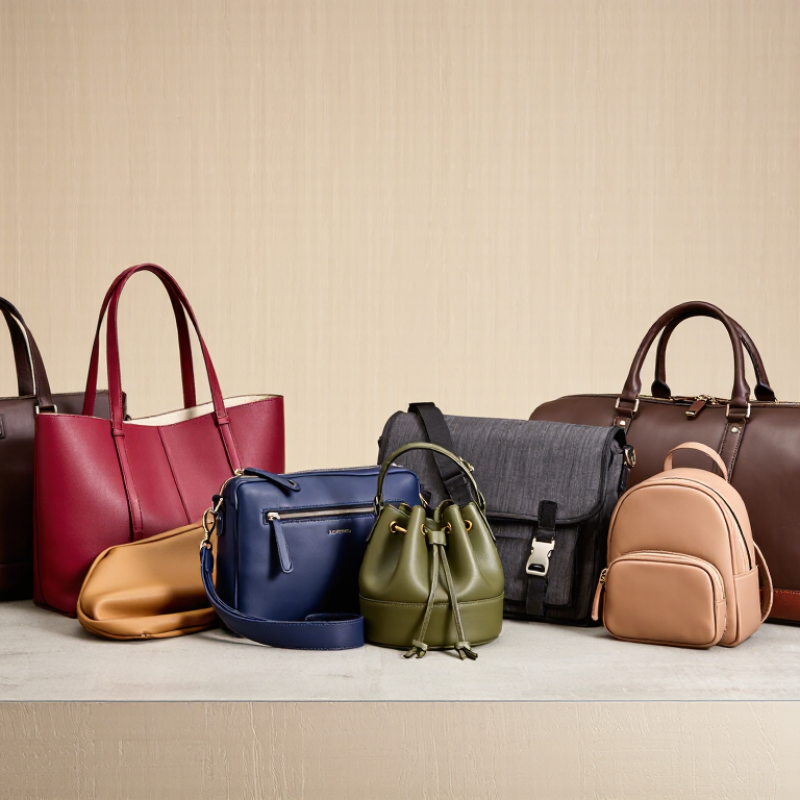
Ten useful styles serve different routines. Grand View Research valued the global leather goods market at USD 468.49 billion in 2023, with projected growth through 2030. This broad category includes more than bags, so it offers market context, not a bag-sales forecast. For daily carry, consider a roomy tote, compact crossbody, structured satchel, relaxed hobo, or small top-handle bag. Commuters may prefer a backpack or messenger; office users often need a briefcase. A bucket bag suits flexible storage, while a duffel works for short trips.
Function depends on details, not just the silhouette. Check strap width, closure quality, lining, and whether the base stands upright when loaded. A full-grain leather bag may develop a visible patina, while a coated finish can be easier to wipe clean. But glossy surfaces may show scratches sooner. That trade-off is easy to overlook. Buyers should also compare empty weight and interior pocket placement against their customers’ daily needs.
Tips: Request close-up photos of seams, edges, hardware, and the bag interior before approving samples. Test zippers with one hand, and place a water bottle inside to check balance. Ask suppliers to confirm leather type, dimensions, and care instructions in writing. Small differences matter.
How to Match Bag Design and Features to Its Intended Use
A cow leather bag should fit the work it will do, not just the outfit beside it. For daily commuting, look for a medium size, a secure closure, and a shoulder strap that stays comfortable over a coat. A flat base helps the bag stand beside a desk, while an inside pocket keeps keys from disappearing. Check the bag’s weight before adding a laptop, water bottle, and notebook. That load adds up.
For travel or busy days, a crossbody design can keep essentials close and leave your hands free. Choose adjustable straps and seams that feel even around stress points. For meetings, a structured top-handle bag may look neat, but make sure it fits the items you actually carry. Cow leather varies in thickness, finish, and flexibility, so inspect the sample rather than relying on appearance alone. A glossy surface may show scratches more clearly. I sometimes overvalue a polished look; comfort matters more after several hours.
Tips: Measure your largest item before choosing a size. Test the zipper, strap attachments, and lining. Ask how the leather responds to moisture and routine cleaning, since care needs differ by finish. Leave a little room, but avoid buying a bag so large that it invites unnecessary weight.
Care, Sourcing, and Import Considerations for Buyers
When comparing cow-leather bags, look beyond color and surface shine. Ask suppliers about the leather’s origin, tanning method, and material consistency across production batches. Full-grain and corrected-grain leather can differ in texture, durability, and price. Request close-up photographs of seams, edges, lining, and hardware, then inspect a physical sample when possible. A polished sample is not a guarantee of bulk quality. Small differences matter.
Care starts before the bag reaches a customer. Store leather away from direct sunlight and damp walls; prolonged heat can dry it, while moisture may encourage mildew. For routine cleaning, use a soft, dry cloth and test any conditioner on a hidden area first. Avoid soaking the leather. That sounds simple, but care instructions are often overlooked. Include clear guidance for storage and cleaning, especially if buyers will resell the bags.
Before importing, confirm quantities, packaging details, lead times, and payment terms in writing. Ask for a packing list, commercial invoice, and any origin or material documents relevant to the shipment. Import requirements and tariff classifications vary by destination, so verify them with a qualified customs professional before dispatch. Check how bags are packed: crushed handles or damp cartons can turn a sound order into a costly problem. Allow time for inspection and transport delays. A little caution helps; it cannot remove every risk.
Cow Leather Bag Care: Suggested Routine Intervals
A practical care schedule for buyers evaluating everyday cow leather bags.
Suggested intervals: dust or wipe the surface every 7 days, inspect seams and hardware every 30 days, and consider conditioning about every 180 days. These are general guidelines, not universal requirements; climate, use, leather finish, and the supplier’s care instructions may change the schedule. Blot spills promptly and test care products on a discreet area first.