Leave Your Message

China Top 10 Women Sports Shoes Manufacturers

Women’s athletic footwear is a performance category, a fashion choice, and a demanding manufacturing challenge. For buyers, a shoe must feel stable on a wet pavement, flexible during a gym session, and comfortable after hours of wear. The global athletic footwear market reflects that scale: Grand View Research estimated its value at US$133.4 billion in 2023 and projected continued growth through 2030. That figure covers the broader athletic footwear market, not women’s shoes alone. An important distinction.

For this guide to China Top 10 Women Sports Shoes Manufacturers, market size is only one starting point. Factory experience, material sourcing, fit development, quality controls, customization, and export capability also matter. World Footwear’s 2024 Yearbook reported that global footwear production reached about 22.4 billion pairs in 2023, with Asia producing the vast majority. The figure shows the region’s manufacturing scale, but it does not prove that every supplier offers equal expertise. Buyers still need to verify samples and factory claims.

Fit deserves particular attention. Biomechanist Benno Nigg’s widely cited guidance is: “The most important factor is comfort.” That principle is useful, though comfort varies across foot shapes, activities, and personal preferences. This overview compares manufacturers through practical criteria and encourages readers to confirm specifications directly. No list can replace a wear test.
China Top 10 Women Sports Shoes Manufacturers

What Defines a Women’s Sports Shoe Manufacturer in China

What Defines a Women’s Sports Shoe Manufacturer in China

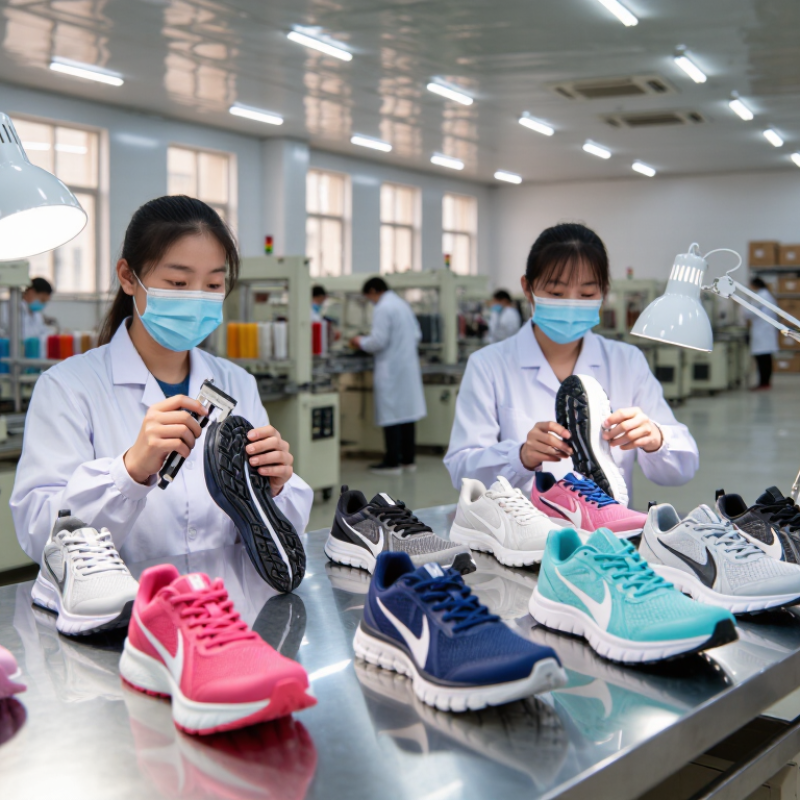
A capable women’s sports shoe manufacturer does more than reduce a men’s pattern. It adjusts lasts, toe shape, arch support, and cushioning for different foot proportions. Sample pairs should be checked during movement, not only on a workbench. Look for documented fit trials across several sizes, plus clear material and production records. Details matter: a heel that slips during a short jog can undermine an otherwise polished shoe.

The World Footwear Yearbook 2024 reports that global footwear production reached 22.4 billion pairs in 2023, up 6.9% from 2022. This scale reflects a broad manufacturing base, but volume alone cannot verify comfort or consistency. Ask how the factory controls sole bonding, stitching, and size tolerances between samples and bulk orders. Request inspection records and development timelines. A candid limitation: a factory’s test results may not predict every wearer’s experience.

Tips: Request a size-graded sample set, wear-test it on the intended surface, and compare measurements with the approved specification. Check again after repeated flexing. Small gaps can matter.
How China’s Women’s Sports Shoe Industry Is Structured

China’s women’s sports shoe industry is built around a network of specialized suppliers, factories, and product developers. Some manufacturers focus on design and sampling, while others handle large production runs. Upper materials, cushioning, outsoles, and packaging may come from separate suppliers, so coordination matters. The chain is layered. A change in foam density, for example, can affect both comfort and the final shoe shape.

Factories often work through OEM or ODM arrangements, depending on whether a buyer supplies the design or requests development support. Skilled pattern makers and sample technicians translate measurements into wearable prototypes. Fit testing should include different foot shapes, not just a standard size. Small details matter. A tight toe box may look fine on a sample but feel uncomfortable after a full day of walking. Production capacity alone does not show how well a factory manages quality checks, material consistency, or seasonal deadlines. Buyers should review samples and ask how defects are recorded and corrected. The process is not always smooth; communication gaps can still lead to costly revisions.

Criteria for Selecting China’s Top 10 Manufacturers

Selecting China’s top women’s sports shoe manufacturers requires more than comparing prices. The World Footwear Yearbook 2024 reports global footwear production of about 22.4 billion pairs in 2023, with China producing 55.5%. This scale shows strong manufacturing capacity, but it does not guarantee consistent quality or a good fit. Ask whether a factory develops women-specific lasts and can adjust toe-box width, arch support, and heel hold. Fit matters on the shop floor and during repeat orders.

Assess production controls with evidence, not promises. Review recent inspection records and request test reports for outsole abrasion, flexing, bonding strength, and colorfastness. Check whether samples match bulk materials, stitching density, and sole alignment. Ask for defect rates, corrective-action records, and the process for handling size variations. A polished sample can hide weak production controls. Supplier audits help, though one visit cannot prove year-round consistency.

Tips: Send a size-graded reference sample and test it on several wearers. Record pressure points after a short walk. Compare the factory’s results with an independent laboratory when possible. No checklist is perfect; real wear feedback may expose gaps that paperwork misses.

Profiles of China’s Top 10 Women’s Sports Shoe Manufacturers

Profiles of China’s Top 10 Women’s Sports Shoe Manufacturers should compare factory strengths, not just catalog photos. A useful shortlist covers ten capability profiles: high-volume OEM lines, flexible design teams, knitted-upper specialists, molded-sole makers, lightweight running-shoe producers, court-shoe workshops, walking-shoe developers, recycled-material users, small-batch exporters, and vertically integrated factories. These are capability profiles, not a verified league table. Public rankings rarely disclose audited output or defect rates. That gap matters.

The World Footwear Yearbook 2024 estimates global footwear production at about 22.4 billion pairs in 2023, with Asia producing roughly 87 percent. This signals regional manufacturing scale, not women’s sports-shoe market share. For each supplier, request audit details, monthly capacity, sample-to-bulk tolerances, material test results, and a recent production reference. Test fit across several foot shapes; a tidy sample can still cause heel slip or toe pressure. Sustainability claims also need traceable material records.

Tips: Ask for a size-set sample, then inspect stitching, sole bonding, and comfort after repeated wear. One test is not enough.

How to Compare Manufacturers by Products, Capacity, and Certifications

When comparing women’s sports shoe manufacturers in China, match each supplier’s product range to your intended use. Running shoes need different cushioning and outsole grip from court or training shoes. Ask whether the factory can adjust the last, upper materials, and sizing for women’s feet. Review physical samples, not just catalog photos. Check stitching around the toe, bond strength, and comfort after repeated wear. Details matter. Request samples from a production run when possible; a carefully made showroom pair may not reflect everyday output.

Compare capacity using practical figures: active production lines, monthly output for similar styles, minimum order quantities, and typical lead times. Ask how peak-season orders affect delivery. Numbers can mislead. A large stated capacity is less useful if the factory cannot show consistent quality records or clear production planning. For certifications, confirm the document’s validity, issuing body, and exact scope. It should cover the relevant facility, product, or process—not simply a related company. Request recent audit or test records, then verify that they match the factory and shoe model under discussion. Small gaps in paperwork deserve follow-up.

China Top 10 Women Sports Shoes Manufacturers - How to Compare Manufacturers by Products, Capacity, and Certifications

Comparison worksheet for evaluating ten prospective suppliers. Supplier-specific product ranges, production capacity, and certifications are not independently verified here; confirm each item directly and request current supporting documents before making a sourcing decision.

Supplier Women’s Sports Shoe Products Monthly Capacity Capacity Evidence to Request Certifications and Compliance Evidence Key Comparison Check
Manufacturer 1 Request current women’s footwear catalogue and model list. Not verified; request figures by model and construction type. Production records, line allocation, and recent shipment references. Request valid certificates and audit reports; verify issuer, scope, site, and expiry date. Confirm sample matches the proposed production materials and construction.
Manufacturer 2 Request current women’s footwear catalogue and model list. Not verified; request figures by model and construction type. Production records, line allocation, and recent shipment references. Request valid certificates and audit reports; verify issuer, scope, site, and expiry date. Compare tooling, minimum order quantity, lead time, and repeat-order capability.
Manufacturer 3 Request current women’s footwear catalogue and model list. Not verified; request figures by model and construction type. Production records, line allocation, and recent shipment references. Request valid certificates and audit reports; verify issuer, scope, site, and expiry date. Ask how size grading, fit testing, and defect inspection are managed.
Manufacturer 4 Request current women’s footwear catalogue and model list. Not verified; request figures by model and construction type. Production records, line allocation, and recent shipment references. Request valid certificates and audit reports; verify issuer, scope, site, and expiry date. Check material traceability and availability of test reports for the target market.
Manufacturer 5 Request current women’s footwear catalogue and model list. Not verified; request figures by model and construction type. Production records, line allocation, and recent shipment references. Request valid certificates and audit reports; verify issuer, scope, site, and expiry date. Compare development support, sample timing, and change-control procedures.
Manufacturer 6 Request current women’s footwear catalogue and model list. Not verified; request figures by model and construction type. Production records, line allocation, and recent shipment references. Request valid certificates and audit reports; verify issuer, scope, site, and expiry date. Confirm quality-control checkpoints, inspection criteria, and corrective-action process.
Manufacturer 7 Request current women’s footwear catalogue and model list. Not verified; request figures by model and construction type. Production records, line allocation, and recent shipment references. Request valid certificates and audit reports; verify issuer, scope, site, and expiry date. Check whether quoted capacity is available for your order during the requested season.
Manufacturer 8 Request current women’s footwear catalogue and model list. Not verified; request figures by model and construction type. Production records, line allocation, and recent shipment references. Request valid certificates and audit reports; verify issuer, scope, site, and expiry date. Compare packaging options, export documentation, and agreed delivery terms.
Manufacturer 9 Request current women’s footwear catalogue and model list. Not verified; request figures by model and construction type. Production records, line allocation, and recent shipment references. Request valid certificates and audit reports; verify issuer, scope, site, and expiry date. Request references for comparable products and verify them independently.
Manufacturer 10 Request current women’s footwear catalogue and model list. Not verified; request figures by model and construction type. Production records, line allocation, and recent shipment references. Request valid certificates and audit reports; verify issuer, scope, site, and expiry date. Compare total landed cost, payment terms, lead time, and after-sales response.

Note: ISO 9001 and ISO 14001 are management-system standards, not footwear product certifications. Social-compliance audit reports and product test reports have different purposes; verify that each document applies to the actual factory, product, and destination market.